Essential Falconry Equipment for Beginners: A Complete UK Checklist
Falconry kit has a habit of multiplying. One glove becomes a drawer of straps, and a drawer of straps becomes a shelf of hoods. None of that is necessary at the start. What a beginner actually needs is a small, well-chosen collection of equipment that keeps the bird safe, keeps you comfortable, and makes handling your first hawk or falcon feel manageable rather than frightening.
The list below covers the essentials, roughly in the order you will buy them, with notes on what to look for and where your money is best spent here in the UK.
Gloves and gauntlets
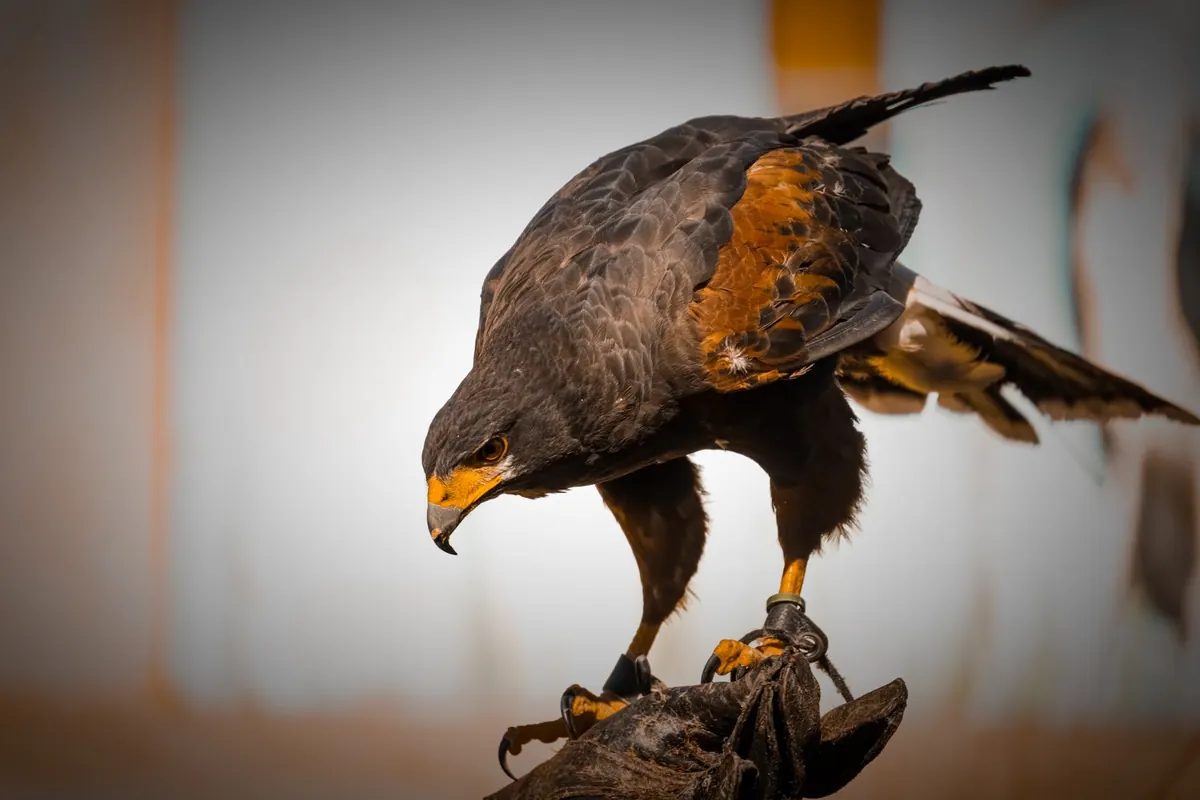
A falconry glove is a gauntlet: it covers the hand and runs up the forearm, past the wrist, because a bird that loses its balance on your fist will grab whatever it can reach. Choose a glove you can actually close your hand in. Loose leather lets the bird shuffle about; tight leather leaves your fingers numb after ten minutes.
Thickness depends on the bird. A kestrel or a small male hawk needs only a light glove. A red-tailed hawk, goshawk or Harris' hawk wants something heavier. Kangaroo leather is popular because it is thin and very strong, but good goat or cowhide works perfectly well. Most people carry the bird on the left hand, so buy for that hand.
Keep leather dry. A soaked glove stiffens and loses grip; a glove dried on a radiator will crack. Dry it at room temperature and use a leather conditioner sparingly.
Jesses, swivels and leash
These three pieces work together as the bird's tether, and this is the kit where cutting corners costs you a bird.
- Jesses — the pair of straps fitted to the bird's legs. Leather jesses need working in and softening; synthetic webbing jesses are cheaper, do not stretch, wipe clean, and are a sensible first choice.
- Swivel — the small connector between jesses and leash that stops the bird twisting the straps around its own legs. Check it turns freely and that no burrs or sharp edges can catch a leg or a finger.
- Leash — the line that actually keeps the bird with you, usually around a metre of leather with a knot at the free end. Long enough to give a little slack, short enough that the bird cannot reach trouble.
Buy the set sized to your species. Jesses that are too wide or too long are a nuisance, and a swivel built for a large hawk is simply weight on a kestrel's legs. Bells and bewits — the short straps that carry the bell — are optional but helpful for finding a bird in long grass.
Inspect jesses, swivels and leash every time you handle the bird. Look for cracked leather, frayed stitching, a stiff swivel or a knot that has begun to slip. Replace anything suspect before it fails. A worn swivel that jams mid-flight can break a bird's leg; a frayed leash can snap in a moment of panic.
Perches and the weathering area
Your bird needs somewhere to sit that is safe, comfortable and off the floor. Hawks are usually kept on a bow perch: a curved shape, often topped with turf or a mat, which suits their grip. Falcons tend to do better on a block perch with a flat top. Whichever you choose, it should be stable, at a sensible height, and fitted with a proper tether point so the leash can be secured with a knot that will not slip.
Indoors, a perch in a quiet corner works well. Outdoors, a weathering area gives the bird sunlight, fresh air and a chance to bathe. It needs shade, shelter from wind and rain, and no reachable hazards — fences, shrubs, garden furniture, other animals. Never leave a tethered bird where a dog or a fox could get to it.
If you keep the bird indoors, think about household traffic. A perch beside a busy doorway is an invitation to bating and broken feathers. A quiet room with a window and a radio on low is often better than a spot in the middle of family life. If you have other pets, keep them out of the bird's space entirely.
Bath and scales
A bath is not a luxury. Birds of prey bathe to keep their plumage in condition, and a shallow pan with a non-slip base, filled with fresh water and standing in the weathering area, is all you need. Change the water daily; a dirty bath is worse than none.
Scales matter just as much. Buy a digital scale accurate to a few grams, then build a routine: weigh at the same time each day, in the same container or on the same perch, and write the number down. Weighing tells you more than looking ever will. Small day-to-day variation is normal, but a sudden or unexplained change is a reason to ring a vet who treats birds of prey. If you are unsure about a bird's health or weight, make that call early rather than late.
Hood and telemetry
A hood is a fitted leather cap that covers the bird's eyes. It is not a blindfold in the cruel sense; a well-made hood calms a bird by removing the visual triggers that make it bale and bate. For a beginner, a hood is useful but not urgent. Learn to put it on and take it off with an experienced falconer first, because a badly fitted hood can rub the eyes or damage feathers. Many first birds are trained without a hood at all.
Telemetry — a tiny transmitter on the bird and a receiver in your hand — is essential once you fly a hawk free in open country, but it is expensive and unnecessary for a bird that is still on the creance or being carried on the fist. Start with a good pair of bells and bewits instead. They are cheap, they tell you where the bird is in cover, and they will teach you to listen for changes in the sound.
Training aids: creance, lure and food
You will need a creance — a long, light line — for early free-flight training. It lets the bird fly further from you while you keep a physical connection. Choose something light enough not to drag the bird down but strong enough to hold if it decides to test the line. A creance is not a permanent tool; it is a bridge between the safety of the fist and the freedom of the field.
A lure is a weighted pad on a cord used to call a falcon back. If you are training a hawk, a lure is less important, but a good one helps with recall and exercise. Food is equipment too: day-old chicks, quail, rabbit, or a good quality frozen diet. Buy from a reputable supplier, thaw it properly, and never feed meat that has been hanging around in the fridge for days.
Transport and carrying
A sturdy carry box or giant hood is how you move a bird safely. It should be dark, well ventilated, and large enough for the bird to stand without touching the top. Line it with something non-slip. Never transport a bird loose in a car. A sudden brake, a dog in the back, or a window left open is all it takes for a disaster.
For short trips, many people use a cadge or a shoulder box. Whichever you choose, secure the bird's leash and jesses before you set off, and check that the box cannot slide or tip. In warm weather, park in the shade and never leave a bird in a car on a sunny day, even for a few minutes.
First aid and everyday safety
Keep a basic first aid kit for your bird and know how to use it. It should include:
- Veterinary antiseptic powder or spray suitable for birds.
- Self-adhesive bandage and gauze swabs.
- Blunt-nosed scissors and tweezers.
- A small towel for restraint and a secure box for transport.
- Emergency contact numbers for your avian vet and a local falconer.
Know your nearest avian vet before you need one. Not every vet treats birds of prey, and a small injury can become serious quickly. If a bird is bleeding, favouring a leg, or refusing food, do not wait to see if it improves. Ring for advice the same day.
Good falconry is mostly good preparation. The kit does not make the falconer, but the right kit gives you and the bird the best chance to learn together.
A realistic beginner's checklist
- A well-fitting gauntlet for your carrying hand.
- One pair of synthetic jesses, a swivel and a leash sized to your bird.
- A stable perch with a secure tether point.
- A shallow bath and a digital scale.
- Bells and bewits for locating the bird.
- A creance for early training.
- A carry box for transport.
- A basic first aid kit and a vet's number saved in your phone.
- A notebook or app for daily weights.
Buy the essentials first, then add equipment as your skills and your bird's needs grow. A hood, telemetry, a lure and a weathering area can all come later. What matters at the start is that the bird is safe, you are comfortable, and the two of you can begin to build trust without unnecessary risk. That is the real beginning of falconry.
Photo: Magda Ehlers / Pexels
You Might Also Like
A practical first aid checklist for falconers — controlling bleeding, supporting suspected fractures, and dealing with heat stress, poisoning and shock before you reach an avian vet.
Practical ways UK falconers can back raptor conservation — joining survey and nest-box projects, breeding responsibly, improving habitat and keeping records that stand up.