Daily Raptor Health Checklist: 10 Things to Check Every Morning
Ten minutes in the same place, at roughly the same time each morning, tells you more about a hawk's health than an hour of watching it later in the day. Weigh the bird, read the mutes on fresh paper, run your hands over the feet and jesses, and you already know whether today is a flying day or a day for the perch, the bath and a call to the vet. The order matters less than the habit. Done consistently, small changes — a few grams, a warm foot, a dull eye — surface on the day they appear.
Weight and Body Condition
Weight
Weigh at the same point in the routine every morning: before food, before the bath, before any flying. Use the same scales in the same spot, and write the number down even when it barely moves. Your bird's own pattern over a fortnight is the only figure that matters.
A small overnight drop is normal, especially after casting. A larger or unexpected fall is a question rather than a panic — has the bird been cold, disturbed, off its food? An unexplained rise is just as interesting: a hawk that has caught a mouse in the mews will show it on the scales before it shows it anywhere else.
Keel
Then feel the keel while the bird is on the fist. You want firm, rounded muscle either side of the breastbone. A sharp, prominent ridge means the bird is too light; ease the feeding and rethink your weight management before you fly again. It takes seconds of handling, and it catches drift that a daily weigh-in can hide.
Droppings and Castings
Mutes
Fresh paper each morning makes this job easy. A normal mute has three parts: a dark, fairly solid faecal portion, a white cap of urates, and a little clear urine. Colour shifts with diet, so learn what is usual for your bird on your usual food.
Watch for changes rather than one odd dropping: blood, black tarry mutes, a sour smell, a great deal of watery urine, or a run of bright green. Some of that simply means an empty crop; some of it needs professional advice. Photograph the paper and ring your vet if you are unsure.
Castings
Most hawks and falcons cast a pellet by the morning, depending on when they were last fed. Break it open with a twig — you want fur or feather, no obvious blood, and a cast that looks complete. A bird fed only skinned, boneless meat has nothing to cast, and that has consequences for the crop and digestion. A bird that has not cast, or casts something streaked or foul-smelling, is worth watching and worth a phone call if it continues.
Crop and Appetite
The crop should be empty first thing. If it is still full from yesterday, feels doughy, looks swollen or smells sour, that is not a wait-and-see problem — get veterinary advice that day.
Appetite is the other half of this check. A bird that steps to its food and eats with purpose is usually a bird that is well. One that normally eats keenly and now turns away, eats slowly or picks at the meat is telling you something. So is a bird that is suddenly frantic about food. Note it in the log and watch the next meal closely.
Feet, Legs and Jesses
Lift each foot and look at the underside. Check for heat, swelling, scabs, a red spot, or a pad that has hardened. Bumblefoot starts small and warm; caught early it is far easier to manage. Feel the hocks and ankles too, particularly in a bird that spends hours on a hard perch.
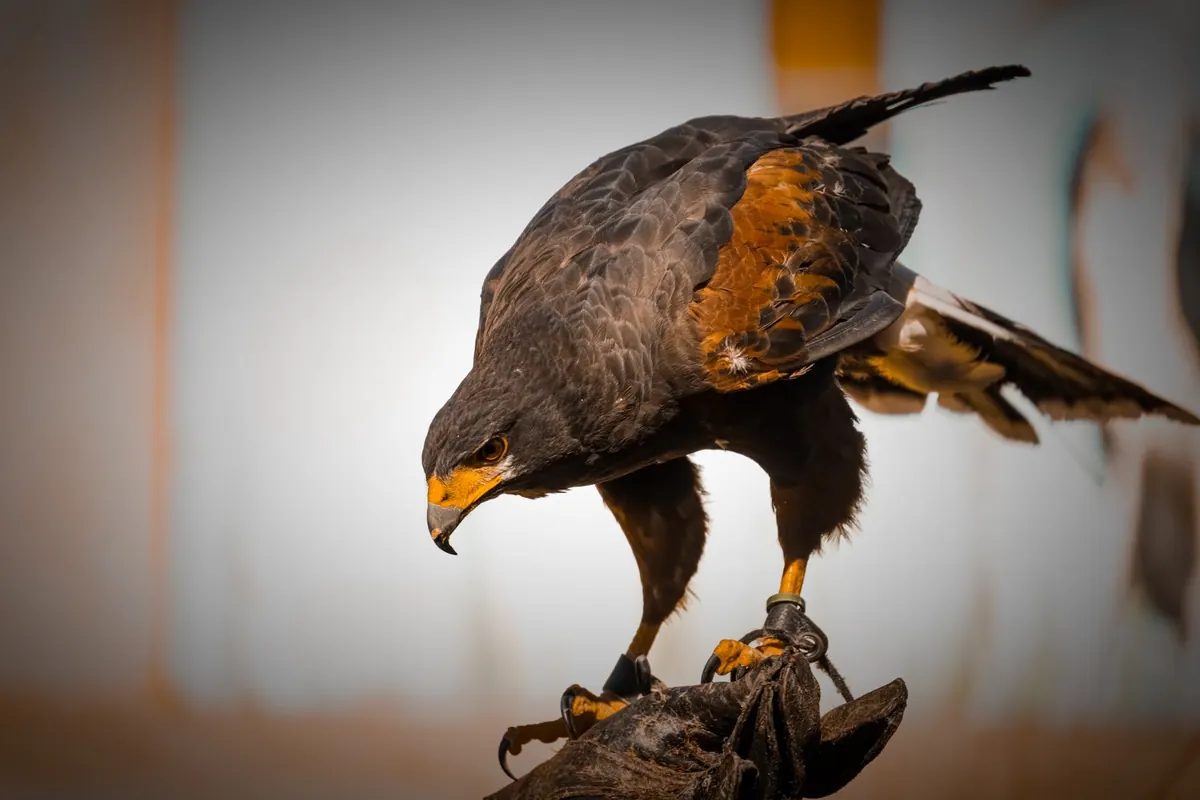
Then check the furniture. Anklets and jesses should sit flat without pinching, and the leather should be supple. Wet jesses left on overnight will rub, and stiff, cracked leather will fail. Talons should be sharp, not overgrown or chipped. If a jess looks tired, replace it today rather than on the morning it lets you down.
Eyes, Beak and Feathers
Eyes
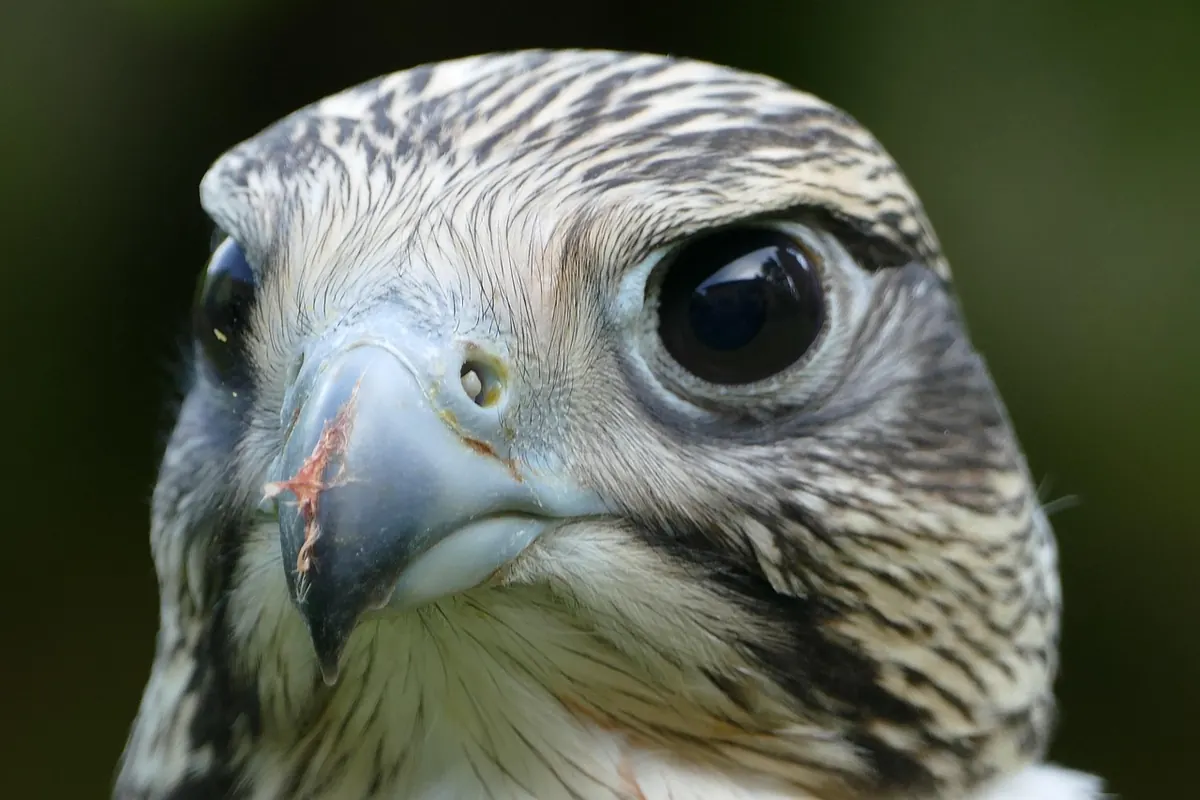
Both eyes open, clear and even. Squinting, weeping, cloudiness, redness or swelling needs a vet, not a home remedy. A tired bird in dim light will half-close the eye nearest you, so check both properly before deciding something is wrong.
Beak
Look for chips, flaking and a tip that meets the lower mandible cleanly. Overgrowth usually points to something else: the wrong feeding surface, too little casting material, or a bird that has not been eating well. The cere and nostrils should be clean and dry, with no whistling or clicking as the bird breathes. Do not file a beak yourself unless someone experienced has shown you how; it is easy to take too much.
Feathers
Check the primaries and tail for breaks and splits, and look for faint pale stress marks across the blade — a record of a hard patch weeks ago. Lice and mites show up as tiny moving specks, eggs near the quill, or feathers that look chewed. Dull plumage on a bird that cannot be bothered to preen is often the first visible sign that something is wrong. A moulting bird looks ragged on purpose.
Behaviour and Equipment
Behaviour
Watch before you touch. An alert hawk stands upright, looks about, rouses, preens and shows interest in food. Trouble looks like a bird sitting fluffed with its tail tucked, a head held low, reluctance to step up, or unusual stillness. Give breathing thirty seconds as well: rapid breathing after a bate is normal, but tail bobbing, open-mouthed breathing at rest or a wheeze is not.
Equipment
- Scales: battery or calibration weight checked, dial zeroed before use.
- Jesses, anklets and bewits: supple leather, no cracks, no pinch points.
- Swivel and leash: no fraying, rust or twisting.
- Perch and bow perch: clean, sound covering, sensible diameter.
- Bath: clean water, changed daily, safe depth.
- Mews and weathering: latches secure, wire sound, ventilation good, fresh paper down.
Making the Routine Stick
Same order, same spot, ten minutes. Write the weight and one line of notes, because memory is a poor record over a season. If something is off, act that day: keep the bird warm and quiet, separate it if you suspect infection, and ring a veterinary surgeon who works with birds of prey. This is general guidance rather than a diagnosis, and raptor illness can move quickly. The call you make on the morning you are unsure is usually the one that matters.
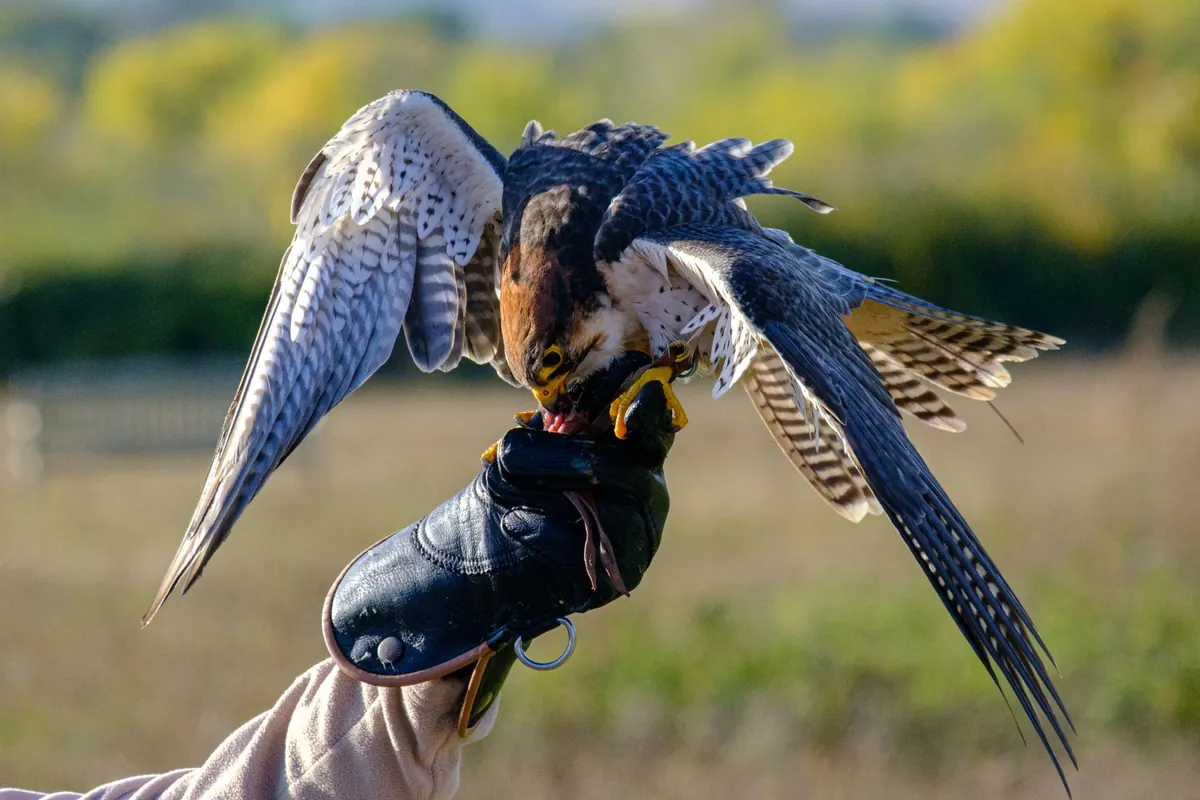
Photo: Sean P. Twomey / Pexels
You Might Also Like
A practical first aid checklist for falconers — controlling bleeding, supporting suspected fractures, and dealing with heat stress, poisoning and shock before you reach an avian vet.
Practical ways UK falconers can back raptor conservation — joining survey and nest-box projects, breeding responsibly, improving habitat and keeping records that stand up.